Thursday, July 19, 2012

Evidence

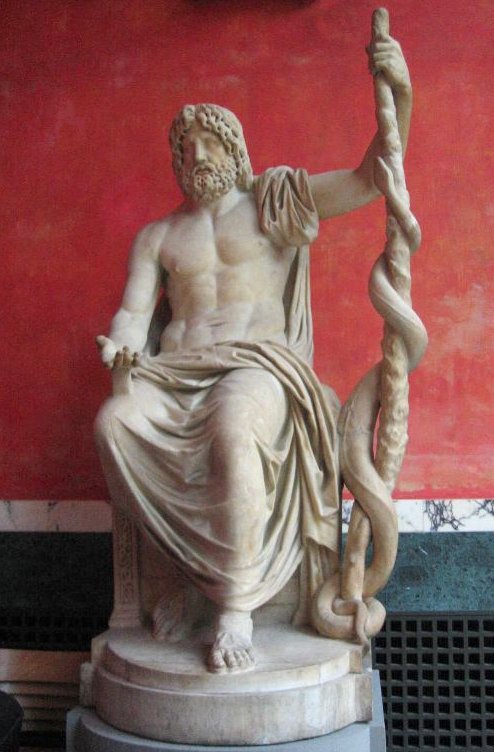
William of Occam
Evidence is the set of tangible and intangible things used to support facts which will ultimately prove a point, such as:
  • Documents created by parties for the purpose of later proving something,
  • Video footage of an event,
  • Audio recordings of a sound or conversation,
  • Testimony of witnesses to an event,
  • Opinion of an expert regarding something specialized, or 
  • Opinion of an ordinary person about every day occurrences.
"Evidence" sort of has two meanings: in colloquial terms evidence means those things which someone points to in order to prove a point (however valid they may be), but really it means those things which actually prove that point. These two aspects are two sides of the same coin, and go hand-in-hand. In order to prove his or her point, a person will point to things and say, "see, the moon is made of cheese...and this is my evidence." If you accept those facts, then you're agreeing that what he's called evidence is evidence.

Because of this dichotomy, a credulous person can be duped by evidence proffered by a proponent merely because that person calls it evidence (the moon looks like cheese, thus it is). However, the questioning person will only accept evidence in its second sense: Does the proffered evidence really support the facts necessary to prove anything? (The speaker's never tasted regolith and cannot know.) 

How do you know whether the evidence proves a particular point? That depends largely on the point. For instance, consider these scenarios and which facts you would need to prove that the speaker is telling the truth:
  1. A friend tells you that she is pregnant.
  2. A friend tells you that your dog is pregnant.
  3. A friend tells you that you are pregnant.
  4. A friend tells you that her sister is pregnant by divine intervention.
Take a second to think about what you need to know in each situation to know that your friend is telling the truth.

Generally speaking, you'd need to know something about how pregnancy works. Using only your common sense, you can apply this to eliminate false propositions: Is the subject female? Is she fertile? Is she young enough to actually be pregnant? If the answer to any of these questions is "no," then your friend is probably lying or deceived.

If the answer to the common sense questions is "yes," other facts might be needed to convince you, depending on the situation.

1. Your Friend's Pregnancy.

Your friend's statement that she is pregnant may well suffice. Ultimately, its her own business and her pregnancy may not much affect your life. At that point you congratulate her and start planning her baby shower. No more is required.

2. Your Dog's Pregnancy.

Now you might be really interested. How did she come by this information? You might inquire whether she is a veterinarian or a breeder. Or perhaps she has personal knowledge: her male was seen breeding with your female dog. Or maybe her dog exhibited some similar symptoms which led her to this conclusion.

If she affirms that she has some specialized reason to know, you might be satisfied and take appropriate action depending whether you want a litter of adorable pups to care for. Thus, the standard of proof is a bit higher because the facts are more removed from your friend and more personal to you.

3. You are Pregnant.

Now, assuming you do not already have evidence that you are pregnant, you might be astonished and really interested to know why she thinks you are pregnant. You might apply further common sense, and argue with her: "No, I am not pregnant. I just had my period... or... I take the pill... or... its been a long time..." If she persists despite your protestation, you might politely change the subject.

However, if you have no independent reason to doubt her, you are unlikely to take her at her word, whatever evidence she presents —  your healthy glow, your protruding middle, your craving for chocolate covered eggplant slices — in the end, if she really piqued your curiosity, you'll take a pregnancy test. The result of that test will be the evidence you'll ultimately trust to know if you are, in fact, pregnant.

4. Divine Intervention in Pregnancy.

Religious beliefs aside, to satisfactorily prove that a friend was divinely impregnated will require some extraordinary evidence on your friend's part.
Extraordinary claims require extraordinary evidence. --Carl Sagan
Knowing how pregnancy works, it is hard for me to imagine facts which would prove immaculate conception. Perhaps meeting the divine figure might suffice, but how would this godly figure manifest. If he manifested as a man, I'd believe that he impregnated her, just not that it was a miracle. You might make other assumptions, but the simplest explanation is usually the correct one.
Frustra fit per plura quod potest fieri per pauciora. [It is futile to do with more things that which can be done with fewer.] --William of Occam
If he manifested in some incorporeal form, I'd still be wondering what the mechanism for the pregnancy was. I'd have to question whether there was an exchange of male reproductive fluid, even without intercourse. Genetic tests could narrow the possible number of fathers, and could establish that a male partner did, in fact, contribute to the fertilization.

A physical examination of the woman would reveal whether insemination occurred. A cross-examination of the woman could reveal whether there were any periods during which she was blacked out -- or might force her to admit that she had had intercourse. --- Suffice it to say, that there are tests which can be performed to prove that the egg which formed her fetus was fertilized by a sperm cell. And until those tests are exhausted, few of us but the most credulous would buy the divine intervention argument.

Accept as evidence only that which provides a rational explanation of a claim. In law as in life, put up or shut up.

Your Bear.

Wednesday, July 11, 2012

Confidence

He who hesitates is a damned fool. Mae West
I wanted to write a few words about confidence. In life's endeavors, confidence is so critically important. Putting yourself out on a limb is what differentiates you from the crowd, what makes you interesting, but also what makes you vulnerable. Confidence is only required when you're at odds with someone. And in order to be confident, you have to risk being wrong.

Two things inspired this post. The first is that I recently filed an opposition to a motion, confident that I was right on a point of law -- but turned out to be wrong. The issue was the procedure for filing a certain motion in my local district court. I researched the issue. I asked other attorneys about the issue. I called the Court's clerk regarding the issue. I reviewed my prior filings on the issue. When I filed my papers I felt I was right.

But after I filed the paper, the opposing counsel said, simply, "If you had read the right rule, you'd have saved yourself a lot of work." The jerk didn't say what the "right rule" was, so I had to guess. When I guessed, I did about 5 seconds of research, and realized I was in error. GAH! So much for confidence. But on reading the rule more carefully, I knew I was not so wrong at all, though I cited the wrong rule. In fact, I have time to correct my mistake.

The second thing which inspired this post is the following quote recently posted on Facebook:
“The problem with the world is that the intelligent people are full of doubts, while the stupid ones are full of confidence.” Charles Bukowski
As flippant as this sentiment is, it rings of some truth. Scientists have categorically shown the human activity is responsible for nearly irreversible climate change; yet the doubters are as vociferous as ever. Gay rights are popular and constitutional; yet the haters rally against them. Evolution is supported by incontrovertible evidence; yet intelligent design is institutionalized. (For more on evolution and climate change, please see (and support) the National Center for Science Education.) If only we could eliminate the dissenters, we could start to solve the problems! (I'm definitely going to write a blog post on dissent!)

Dissent is at the heart of our adversarial system of law and governance. To dissent, confidence is required. Proper dissent benefits both sides: without something to push against, the truth may never come out.
Let us be thankful for the fools; but for them the rest of us could not succeed. Mark Twain
But never let your dissent blind you to the evidence. (Evidence is another topic on which I plan to write.) When I did my research, there was a hole in it -- I was ignorant of path to the correct answer and relied on my limited knowledge. When I looked at the evidence (here in the form of the correct rule), I was able to correct my mistake. Such is the path of knowledge.

The moral of the story is: when you feel most confident, step back and consider who is the fool and who wise, but in the absence of evidence to the contrary, take the step and be prepared to learn and move on when proven wrong.

Your, Bear

Thursday, July 5, 2012

Sweet Sixteen

Davey, Franco and Me, 2002
Yesterday was Davey and my anniversary. We met 16 years ago in Guerneville California, in a now-defunct resort called Fifes. It was the July 4th holiday weekend and the place was packed with hot guys. He was at the bar above the pool ordering a beer and I ordered a couple bottles of water. I asked him what everyone asks him: "What is your tattoo?" No doubt he forgot all about me and I didn't see him again that weekend.

Instead, about a week later, I saw him working out at the also-now-defunct Market Street Gym (now Gold's Gym in the Castro). I was shy because he was so hot -- working out with no shirt on, if I recall correctly -- but approached him anyway, "You don't remember me, but we met last week..." I asked him to dinner that Saturday, and we've been together pretty much ever since.

That was 1996, and I was 28 he was 31. Now its 16 years later! Time flies, so make sure you've made the right decisions. Carpe diem quam minimum credula postero. I love you Davey!

Your, Bear.

Wednesday, July 4, 2012

Coming Out!

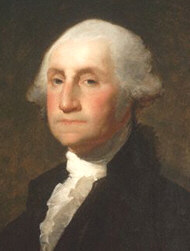
In honor of July 4, our First President
I've been planning this blog post for a long time. This is the blog post where I explain why I quit my job and became a freelance attorney. This is the blog post where I explain what I am going to do with the rest of my life. But I'm 45, gay, and seriously unmotivated. So I don't have well-formed answers to those questions.

So instead, I'm going to make a list of what I'm good at and what I suck at (see the side bottom bar, once I find an extension that will allow it). The worst thing that can do it provide fodder for my updated blog. One of my commitments is to write an entry each week highlighting a topic of interest to me, be it law-related, skeptic-related, or gay-related (cycling related entries will be on Bear's ALC Page). I'll continue to do do this until I've figured out the answers to aforesaid questions. Perhaps that will be in 2013 or perhaps it will be in 2043 or perhaps I'll be dictating it to my descendants from the glass jar where my head is stored.

Along the way, I'll be adding entries on (in no particular order) the importance of digital authorship and social media, dilettantism, how very much more important leisure is than work, the importance of good health, my life-long battle with introversion, the rise and ultimate equality of gay people, the rise and ultimate predominance of liberal thought over conservative, and the nonexistence of God and where morals really come from.

I want to write a good bit on persuasive writing. As a persuasive writer, I know I'm in my infancy. However, that appears to be the general direction of my career. As such, I need to know more about it. So another of my commitments is to learn what others have said about persuasive writing and accept or reject their contentions, postulates, hypotheses, laws and corollaries.

I'll end this post with just a couple short list of facts about my career, to date:

  1. I received a Bachelor of Science degree from San Francisco State University in 1998.
  2. I worked a desultory 10 years as a software engineer.
  3. I wanted an advanced degree, learned that law school was only three years, applied to schools, was accepted, and attended Golden Gate University School of Law from 2003 to 2006.
  4. I obtained my J.D. in May 2006.
  5. I studied as if I was not a committed dilettante and passed the California Bar Exam on the first try in June 2006 and was admitted to the bar in December 2006.
  6. At the time, Davey and I owned a condo in San Francisco, and we were desperate for cash to keep it; I needed to take the first job I could find.
  7. I accepted a job as Associate Attorney at Cook Brown, LLP in Sacramento and tried commuting for about a year -- that did not work and we moved to Sacramento a year later and subsequently sold the condo.
  8. Selling the condo was a big mistake.
  9. I worked at Cook Brown from 2007 to 2012. I learned a lot there. How to take a deposition. How to prepare for trial. How to write and read the law. And, possibly most importantly, conservatives are people too.
  10. In 2012, I realized that I was in the wrong place and that as long as I stayed I was going to be miserable.
  11. With only a modicum of planning, I left my job in May 2012, just prior to the AIDS Life/Cycle 11, a ride that may well have saved my life.
  12. I am now accepting contract work from all comers and will begin to take my own cases as soon as possible.
  13. Age, education, and proclivities aside, I still have not found that one thing to which I can commit my working life.
As always, I am open to suggestions.

Your, Bear.

Monday, September 12, 2011

My List of Science Facts all People Should Know

Inspired by the Science Cheerleader, here's a non-exhaustive list of science facts all people should know, loosely grouped in categories. I chose these because I've spoken to people who had seriously misguided understandings of one or more of them. Though I provide citation, these facts are those I've learned in school or college, or just by reading.

  1. Science works by comparing theory to observation; anything that makes a physically observable change can be described by science.
  2. There is no center of the universe.
  3. The moon's phases come from our viewing angle of the 1/2 of the moon which is illuminated by the Sun, not the Earth's shadow on its surface (that's a lunar eclipse).
  4. 99% of the solar system's mass  is in the Sun.
  5. The Sun/Earth/Planets are about 4.5 billion years old, and the universe is about 13.75 billion years old.
  6. Light from the Sun takes about 8 minutes to get to the Earth.
  7. The Earth is 93,000,000 miles from the Sun.
  8. The speed of light is 186,000 miles per second, and matter cannot be accelerated faster than that (or probably a significant portion of that speed).
  9. Disease is caused by germs, not by magic, energy imbalance, or sin.
  10. Medicine works by eliminating infection (or removing or controlling the germs), and repairing physical damage to the body.
  11. Humans have been around for about 200,000 years, and our family of species have been around for about 2,000,000 years.
  12. Humans evolved from lower order creatures, and, genetically speaking, all life on Earth shares a common ancestor.
I consider this stuff basic knowledge, akin to how to tie your shoe or feed yourself. Don't be duped into the student's conundrum: why do I need to know it if I'm not going to use it every day. You need to know it in order to build on it, in order to inform your day to day interactions. I've commented on that in previous posts.

[To come: examples of why each is important.]

Saturday, September 10, 2011

My Skeptic Story in the JREF!

You can read about my path from crazy religion to skeptic at the JREF Blog. (FYI, its "Raman" not "Ramen" -- but not a biggie.)

Friday, September 9, 2011

Science Rules -- The Tenets you should know

According to the Science Cheerleader (thanks TWIT for the heads up), these are the 18 basic tenets of science you need to know to be a smartie pants. I bet there are more, and these are not all "fundamental," but they are a good start. I grouped them into easier-to-remember er...groups, paraphrased them somewhat, and provided little explanations to put each in context (I bet you can come up with other reasons why they are important to a lay-person):

  1. Laws and Forces
    1. The laws of physics apply everywhere. [ref.] (which means aliens can't travel faster than light, either)
    2. Every observer sees the same laws of nature. [ref.] (which means there is no fluidic space)
    3. Nuclear energy comes from the conversion of mass. [ref.] (which makes the sun shine brightly)
    4. Everything comes in discrete units and you can’t measure anything without changing it. [ref.] (which means there is a smallest unit of something)
    5. Electricity and magnetism are two sides of the same coin (electromagnetism). [ref.] (which means there is no magic)
  2. Matter and Energy
    1. All elements (those things on the periodic table) are made of atoms. [ref.] (the smallest subunit of an element -- you just gotta know this stuff)
    2. Atoms [are composed of protons and neutrons and] are bound by electron glue. [ref.] (meaning atoms are made of something more fundamental still)
    3. The way a material behaves depends on how its atoms are arranged. [ref.] (molecules are made of atoms; and matter is made of molecules)
    4. [Protons and neutrons] are constructed with quarks and leptons. [ref.] (kinda like stem cells for atoms?)
    5. Energy (the ability to do work) is conserved and always moves from more useful to less useful forms. [ref.] (which means that the energy you use has to be transformed into an equal but less useful state and can never be reformed -- so don't waste gasoline)
  3. Universe
    1. Stars live and stars die. [ref.] (even our Sun, which will, some day, expand and engulf the Earth)
    2. The universe was born at a specific time and had been expanding ever since. [ref.] (its about 13 billion years old)
    3. The surface of the Earth is constantly changing. [ref.] (which means gay sex did not cause the earthquake on the east coast of the United States in 2011)
    4. The Earth operates in many cycles. [ref.] (which means you can use science to divine the tides, location of mineral deposits, and how to solve global warming, and can leave your magic behind)
  4. Life
    1. All living things are made from cells, the chemical factories of life. [ref.] (the basic unit of life)
    2. All life is based on the same genetic code. [ref.] (so far that we've found)
    3. All forms of life evolved by natural selection. [ref.] (c'mon, evolution has had billions of years to do it, a creation myth is not required)
    4. All life is connected. [ref.] (which means you should get out of your car and onto your bicycle as much as possible)
[Next up: My list of science you need to know.]