Saturday, October 20, 2012

The Art of Speaking

When I was a kid, I really wanted to be an author. I read a lot: fantasy, science fiction, art history, science, encyclopedias (remember those?), the Bible, the dictionary, pretty much everything in our meager library. I had a lot of knowledge, but no experience. I cast about looking for a path. I used to walk alone in the woods giving oratory on any topic which interested me.

I used to take an iris stalk and pretend I was the fairy king. I used to take off my clothes and see how far I could get hiking naked (very far indeed) without being discovered. All the while imagining myself in a far away land, brimming with possibility. I felt ready for college when it approached. I felt ready for anything.

Rude awakening: college was not ready for me.

When I chose my college, I chose the most idyllic but incongruous setting imaginable for a northern kid: Hampden-Sydney College. An all-male perfunctory post-secondary educational institution for decaying southern aristocracy before they became nobody-but-well-paid politicians, mid-level managers at family companies, and leisure-class layabouts. I was not in my element. Nobody wanted a naked, iris-weilding fairy amongst them. But that is a story for another blog post. This post is about using language.

Hampden-Sydney's freshman curriculum did not contain classes in English, Composition, or Public Speaking. Instead, the class was called "Rhetoric." Rhetoric is the art of persuasion — winning people over to your side:
rhetoric (rĕt'ər-ĭk) n. 1.a. The art or study of using language effectively and persuasively. ... 2. Skill in using language effectively or persuasively. —American Heritage Dictionary.
The art of persuasion. But it is an interesting choice of title for a class. Anachronistic, almost lurid. Why? Because of this alternative definition:
3.b. Language that is elaborate, pretentious, insincere, or intellectually vacuous.
For a college so ready to disown a pupil, this later definition resounds in my head whenever I think about that class. It particularly resounds now that my career is all about "using language persuasively." I often remark that practicing law is the art of getting people to do what they don't want to do. It resounds when I use the word in its primary sense (the use of language), and it reminds me of another story.

One of the tasks with which lawyers are beset is conferring with opposing counsel. Ideally, counsel is dispassionate and polite when speaking to the other side directly. But that is often not the case.

I was in an extended battle with opposing counsel to retrieve certain information during the discovery process. She, as attorneys are wont to do, was hiding something; and I, similarly, was intrigued by the riddle. To keep the information from me, we were arguing about the meaning of a word. I asked her to "look beyond the rhetoric [sense 1.a.]" and realize that her client had the duty to provide the information sought.

That word set her off. "Rhetoric [sense 3.b.]? You think this is about rhetoric?" Indeed, I did, since we were talking about semantics [follow the link, sense 2].

I replied, "Well, its semantics, so yes, we're just arguing about the meaning of this term. I've defined it for you, so please respond according to my definition."

Image credit: Wikipedia.
Trust me when I tell you, do not assume that a juris doctor has a large vocabulary. Apparently "semantics" is also derisive to her because she promptly swore at me and hung up the telephone. (I subsequently won a motion to compel on the topic, by the way. A rhetorical victory for semantics.)

All this is to make my point: Its no wonder that the ancients thought words were magic. Your words often have meaning beyond what you've put behind them. Choose them judiciously and meagerly:
Whatever words we utter should be chosen with care for people will hear them and be influenced by them for good or ill. —Buddha

—Your Bear

Tuesday, October 16, 2012

Politics: Take Sides Gay-boys

Two things irk me (OK, many things irk me): voters who assert that there is no difference between the two parties and gay Republicans. The former because it is demonstrably untrue, the later because civil rights are the single most important difference between the two parties.

As to why the two parties are not different, I have some problems too. For instance, neither candidate is making global warming a priority, science is not sufficiently high in the platforms of either party, the new Affordable Healthcare Act does not go far enough, and the parties' views on tax policy are deceptively similar. Nevertheless, the list of why Obama is a great President is long and well-documented.

But I want to focus on why gay men should vote Democratic in this election.

First, we have to understand what the role of the President is in our federal government. The Constitution provides that:
The executive power shall be vested in a President of the United States of America. He shall hold his office during the term of four years * * *
Those powers include (formatting and edited added):

  • Being the Commander in Chief of the Army and Navy and of state Militia;
  • Requiring the Opinion, in writing, of the principal Officer in each of the executive Departments;
  • Granting Reprieves and Pardons;
  • Making Treaties;
  • Nominating and appointing Ambassadors, Judges of the supreme Court, and others;
  • Giving the State of the Union address — Recommending to their Consideration such Measures as he shall judge necessary and expedient;
  • Convening and Adjourning both Houses;
  • Receiving Ambassadors and other public Ministers;
  • Taking Care that the Laws be faithfully executed; and
  • Commissioning all the Officers of the United States.
Nowhere does the Constitution provide the power to the president that he apparently has if you give only a cursory reading to the news. The President's role in lawmaking is largely limited to the setting policy. The President cannot control oil prices, cannot enact laws (there are certain non-constitutional powers, provided for by Congress), cannot levy or repeal taxes...the list of what he cannot do is much longer than the list of what he can do. In so many ways, it seems that the office of the President is an impotent role.

Yet, it is clearly not.

What the president can do is set the tone for domestic policy and pull the strings of foreign policy. And how does that affect gay rights? President Obama has advanced the rights of gay people to the extent he can in so many ways:
These are the ones that readily come to mind. For a more complete list see: eQualityGiving.org.
Those who cannot remember the past are condemned to repeat it. -George Santayana
To some degree, its all rhetoric. To some degree, that is the President's job.

Your, Bear

Tuesday, October 9, 2012

I'm not a Bad Person, I just Play One on the Internet

Yesterday was a bad day for skepticism. Twice, I tried to use my powers of critical thinking in light-hearted yet meaningful ways, and twice was shot down. Turns out, people don't like to have their cherished beliefs questioned. Who knew?

So, I'm talking two Facebook chats. I'll relay them here in brief.

A. Wherein I am unfriended by a chiropractor.

A local chiropractor posted a graphic depicting commonly used spices (garlic, cinnamon, ginger, turmeric, and cayenne), exclaiming "Five Cancer-fighting Species." Well, this graphic offends me on two bases: first, it is rife with logical errors (amazing how many can be packed into just nine words), and second, it may prevent someone who needs real medical intervention from receiving it.

So I commented that, "It is important to remember to continue medically prescribed treatments for cancer if they've been prescribed to you. There is little evidence that diet can prevent cancer, and no evidence that it can treat cancer." A pithy remark which addressed both of my concerns.

Not so pithy as to escape notice, though. The chiropractor promptly deleted my remark and unfriended me. Guess he's not into Facebook-style stealth debates. You can read my whining about it on the Sacramento Area Skeptics page.

B. Wherein I am accused of belittling religion.

Need image credit.
You may have heard: John B. Gurdon and Shinya Yamanaka won the 2012 Nobel Prize in Medicine for their work on pluripotent stem cells. Someone made an awesome graphic which boils down their work into a digestible web-bite. I'll reproduce it here.

What wonderful research. It has the potential to advance stem cell treatments without the ethical baggage surrounding the use of embryonic stem cells. No magical thinking is going to get you to that result!

So I'm keeping an admittedly cynical running tally of the benefits of science versus religion. By my unofficial count, this is checkmark 3x10^57 in favor of science. So my comment was: "Shinya Yamanaka. Congratulations! Score: Science 3x10^57, Religion 0." (Sorry Mr. Gurdon, and congratulations to you, too!)

A religious friend was, apparently, offended by my remark and accused me of belittling religion. When I asked him where in my remark I belittled religion, he really was unable to say. That's because I am not belittling religion. What I am doing is pointing out its limitations.

I've written elsewhere that I think religion may have a place in society akin to art or music. It can help us to think about our higher nature. In that way it may be useful. What it cannot do is solve life's problems. That's for science. And since science is under attack from believers, my point was both valid and, hopefully, thought provoking.

C. What's the big deal?

The big deal is that magical thinking can keep us from achieving our potential as society. I earnestly want us to solve global warming, live into the coming millennia, and make it off this rock to become a galactic species. This can happen. And if it does, there's only one way: science.

But on a quotidian level, the big deal is that relying on hocus pocus and prayer can actually harm you (read about the harm of herbal remedies and extremist religions). Now, to the extent you impose your beliefs on yourself, I have no problem with that. But when you start recommending that others give up critical thinking in favor of magical thinking, I'm gonna speak up.

I spoke up. I felt bad. I slept on it. I'm good with it.

Your, Bear.

Wednesday, October 3, 2012

To Catch a Lie

A concept which goes hand-in-hand with the nature of satisfactory evidence is the credibility of witnesses. How do you know when someone's perceptions are skewed? How do you know when they are biased? How do you know when they are lying? Its this last question I want to address here.

It is the rare case where someone, sometime is not lying. Everyone lies from time to time. For instance, I'm a inchoate bike mechanic. A few weeks back, I asked the tech at my local bike shop about work stands. He pointed them out, and I promptly searched for them on line, where I found one much cheaper. When I went in to buy other parts, he asked me about the work stand. I felt bad for going elsewhere, so told him, "oh, I just picked up a used one." Lie.

Had he inquired further, I would have had to make a choice: come up with a backstory about my lie ("Oh, I just searched Craig's List...") or tell the truth ("I couldn't help myself, Amazon's prices are 20% less than yours..."). And therein lies one secret to separate lies from truth. This is a secret I use — as does your average pulp-fiction detective — all the time in my practice: both with reticent clients and with adverse witnesses: every statement has a backstory.

As described in 1903 by Francis L. Wellman in The Art of Cross Examination:
No one can frequent our courts of justice for any length of time without finding himself aghast at the daily spectacle presented by seemingly honest and intelligent men and women who array themselves upon opposite sides of a case and testify under oath to what appear to be absolutely contradictory statements of fact. ... The inquiry is most germane to what has preceded, for unless the advocate comprehends something of the sources of the fallacies of testimony, it surely would become a hopeless task for him to try to illuminate them by his cross-examinations.
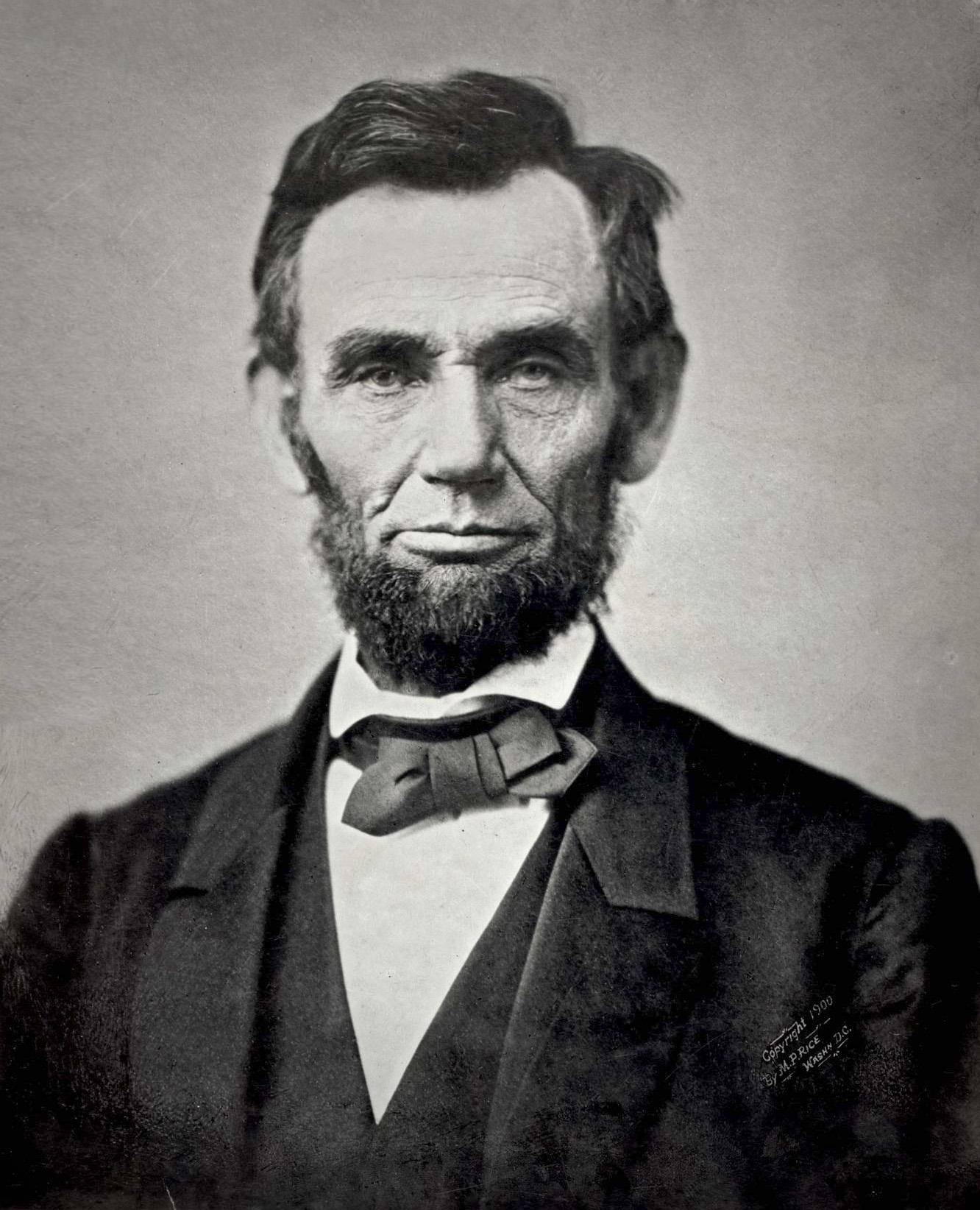
Cross-examination is the process by which an attorney questions the witness about his story — hopefully catching the witness in a lie (or possibly reinforcing his story with additional detail). There are many famous cross examinations. Here is one by our president, Abraham Lincoln defending an alleged murderer (follow link for additional detail):

By Mr. Lincoln:  Did you actually see the fight?
By Mr. Allen:  Yes.
Q:  And you stood very near to them?
A:  No, it was one-hundred fifty feet or more.
Q:  In the open field?
A:  No, in the timber.
Q:  What kind of timber?
A:  Beech timber.
Q:  Leaves on it are rather thick in August?
A:  It looks like it.
Q:  What time did all this take place?
A:  Eleven o'clock at night.
Q:  Did you have a candle there?
A:  No, what would I want a candle for?
Q:  How could you see from a distance of one-hundred fifty feet or more, without a candle, at eleven o'clock at night?
A:  The moon was shining real bright.
Q:  Full moon?
A:  Yes, a full moon.
Q:  [Consulting an almanac.] Does not the almanac say that on August 29th the moon was barely past the first quarter instead of being full?
A:  [No answer.]
Q:  Does not the almanac also say that the moon had disappeared by eleven o'clock?
A:  [No answer.]
Q:  Is it not a fact that it was too dark to see anything from so far away, let alone one-hundred fifty feet?
A:  [No answer.]

Verdict: not guilty. Mr. Allen may well have believed he witnessed the fight — but the facts tell otherwise.

Radiolab recently recorded a show on the very topic of lying: the Fact of the Matter. As always, this Radiolab episode is well written and well orchestrated. My main problem with Radiolab is that they never seem to ask the next question I would have asked and seem content to end the inquiry without the firm answer which is alluringly close — I suspect they do that on purpose (hey, I'm just asking? or maybe they want you to come to your own conclusions on less-than-complete information).

Anyway, in that episode, they interview a Hmong survivor about the genocide which the Laos government committed against the Hmong post-Vietnam. He claimed he saw the aftermath of a chemical attack (an alleged mycotoxin) and the destruction it brought. He also admitted that regular weapons were used to kill his people.

Radiolab is really only after the answer to one question: were the Hmong attacked with chemical weapons? The mycotoxin came in the form of a yellow liquid or powder, and caused the US government to accuse the Soviet government of chemical warfare (causing the US to stockpile chemical weapons). The powder turned out to be uncontaminated bee feces and it was revealed that the Laos government had no capacity to produce or spread such weapons.

During the interview, the witness became agitated when confronted with these facts. He stopped the interview and said, essentially: you're playing a semantic game, the important point is that the Hmong were massacred, what difference does it make that it was chemicals or bullets? (Radiolab got grief from listeners about being too harsh, and provided this thoughtful defense.)

As seekers of the truth, it matters a great deal. However, the interviewers, instead, considered whether there were multiple "truths" at issue (the lack of presence of mycotoxin and the emotional "truth" that the mechanism of death is unimportant) and left it up to the listener to decide how to resolve the conflict.

I think that was a copout by Radiolab. No, they did not need to force the witness into a confession that he was wrong about the chemical weapons. But, they did need to draw the reasonable inference without softening the blow. The reasonable inference under the facts is that the reprehensible acts of the Laos government could not have included the chemical weapons reported.

Sometimes catching a lie is uncomfortable. Sometimes the witness blames the interviewer. It is a true pain of this profession. Especially for someone like me who wishes to please everyone.

Your, Bear

Tuesday, September 11, 2012

Why am I a skeptic?

A recent conversation in a Facebook skeptic's group had me thinking: Why am I a skeptic? The conversation had to do with the label "organic" and whether organic produce is more healthful. The thread started with a post citing an article titled "No Health Benefits from Organic Food."

Because this topic has been rehashed repeatedly in many places and because the group was one dedicated to skepticism, I gave a snarky, off-the-cuff remark: "Sadly, 'organic' is another largely marketing term at which we must roll our eyes for the foreseeable future." There may well be agricultural benefits from the production of organic produce, but as the article indicates, there is no established health benefit from it.

Yet another member of the group has evident strong feelings that there are benefits to organic food production. He posted the result of another study advocating for organic produce and clings to the belief in its health benefits. That study did conclude that there may be an "average increase[] in life expectancy of 17 days for women and 25 days for men" from the consumption of organic food. Such a result is inconclusive for at least two reasons: Is it really possible for people to consume only organic food and if not, how does that affect this outcome? Over a 70 year life span (25,550 days) 25 days is only 0.1% of that time — is that enough to justify the expense?

Answering these questions and deciding to pay the premium for "organic" produce requires us to make a choice. That choice is necessarily guided by an imperfect understanding of the issues for most of us. I am not an expert in chemistry, agriculture, and nutrition. As such, I must rely on the data presented in common news sources and must make the best decision I can from that information.

Skepticism to me means being able to apply a toolkit of critical thinking skills to those common news sources. Applying those skills to the organic issue leads to more questions embodied by this scenario: Given two bags of rolled oats from the Whole Foods bulk bins, one organic and one not, can a consumer identify which is which? Will the consumer obtain more nutrition from the former? Will the consumer be harmed by the later? The answers to these questions are no, no, and no.

So in order for me to choose organic, the proponent is going to have to overcome a fundamental principle of skepticism:
Extraordinary claims require extraordinary evidence. —Carl Sagan
This means the onus is the the claimant, not me, to make the case. Skepticism does not mean giving equal time to every argument about every issue. It means being able to select the issues and evaluate them critically.

And that is why I am a skeptic. I want to think I can be persuaded by fact and not emotion when it comes to important decisions about my life. Yet I don't want to be duped into spending my time, money, and attention on invaluable theories, products, and services. When it is proven that organic products are better, I will take up the mantra. Until them, I'm saving my cash.

Wednesday, August 1, 2012

God? Are you there?

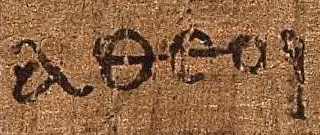
A recent Facebook post got me thinking about atheism and why its a big deal. The Facebook post was one of those poignant graphics with a picture of a person, presumably the speaker, with text superimposed. The text read:
αθεοι ("those who are without god")
Often times when I meet an atheist and we talk about the god they don't believe in, we quickly discover that I don't believe in that god either. --Rob Bell
I don't know who Rob Bell is, but this comment bugs me for two reasons.

First, the implication is offensively presumptuous. Bell implies that atheists haven't thought the problem through. But the atheist places the burden on Bell. The atheist wants to know why Bell's god holds a special place. You can't tell from the quote, but the answer is either that its because of Bell's faith or because of some experience personal to him. Either way, he presents no independently verifiable proof. Instead, no conclusion about the existence of Bell's god can be drawn from checking one god of the list of those worth not believing in.

Second, the reverse implication should be made and Bell's own faith should be questioned. Its the reverse side of the same coin. If Bell can so readily dismiss other gods just because his faith does not encompass them, then others deserve the right to dismiss his god based on nothing more than opinion. Thus, Bell is not doing a very good job defending his faith which makes me wonder if he really believes in god at all.

The reverse of Bell's quotation is this:
I contend that we are both atheists. I just believe in one fewer god than you do. When you understand why you dismiss all the other possible gods, you will understand why I dismiss yours. --Stephen Roberts
Bell's not really understanding why he's so dismissive of other gods, but must do so to maintain his belief system. And frankly, if he wants to blind himself in that way, I have no troubles with that. But when he starts to put his presumptions onto me, then I get to have a say. I say: atheists come out! We need some critical thinking and reason!

Thursday, July 19, 2012

Evidence

William of Occam
Evidence is the set of tangible and intangible things used to support facts which will ultimately prove a point, such as:
  • Documents created by parties for the purpose of later proving something,
  • Video footage of an event,
  • Audio recordings of a sound or conversation,
  • Testimony of witnesses to an event,
  • Opinion of an expert regarding something specialized, or 
  • Opinion of an ordinary person about every day occurrences.
"Evidence" sort of has two meanings: in colloquial terms evidence means those things which someone points to in order to prove a point (however valid they may be), but really it means those things which actually prove that point. These two aspects are two sides of the same coin, and go hand-in-hand. In order to prove his or her point, a person will point to things and say, "see, the moon is made of cheese...and this is my evidence." If you accept those facts, then you're agreeing that what he's called evidence is evidence.

Because of this dichotomy, a credulous person can be duped by evidence proffered by a proponent merely because that person calls it evidence (the moon looks like cheese, thus it is). However, the questioning person will only accept evidence in its second sense: Does the proffered evidence really support the facts necessary to prove anything? (The speaker's never tasted regolith and cannot know.) 

How do you know whether the evidence proves a particular point? That depends largely on the point. For instance, consider these scenarios and which facts you would need to prove that the speaker is telling the truth:
  1. A friend tells you that she is pregnant.
  2. A friend tells you that your dog is pregnant.
  3. A friend tells you that you are pregnant.
  4. A friend tells you that her sister is pregnant by divine intervention.
Take a second to think about what you need to know in each situation to know that your friend is telling the truth.

Generally speaking, you'd need to know something about how pregnancy works. Using only your common sense, you can apply this to eliminate false propositions: Is the subject female? Is she fertile? Is she young enough to actually be pregnant? If the answer to any of these questions is "no," then your friend is probably lying or deceived.

If the answer to the common sense questions is "yes," other facts might be needed to convince you, depending on the situation.

1. Your Friend's Pregnancy.

Your friend's statement that she is pregnant may well suffice. Ultimately, its her own business and her pregnancy may not much affect your life. At that point you congratulate her and start planning her baby shower. No more is required.

2. Your Dog's Pregnancy.

Now you might be really interested. How did she come by this information? You might inquire whether she is a veterinarian or a breeder. Or perhaps she has personal knowledge: her male was seen breeding with your female dog. Or maybe her dog exhibited some similar symptoms which led her to this conclusion.

If she affirms that she has some specialized reason to know, you might be satisfied and take appropriate action depending whether you want a litter of adorable pups to care for. Thus, the standard of proof is a bit higher because the facts are more removed from your friend and more personal to you.

3. You are Pregnant.

Now, assuming you do not already have evidence that you are pregnant, you might be astonished and really interested to know why she thinks you are pregnant. You might apply further common sense, and argue with her: "No, I am not pregnant. I just had my period... or... I take the pill... or... its been a long time..." If she persists despite your protestation, you might politely change the subject.

However, if you have no independent reason to doubt her, you are unlikely to take her at her word, whatever evidence she presents —  your healthy glow, your protruding middle, your craving for chocolate covered eggplant slices — in the end, if she really piqued your curiosity, you'll take a pregnancy test. The result of that test will be the evidence you'll ultimately trust to know if you are, in fact, pregnant.

4. Divine Intervention in Pregnancy.

Religious beliefs aside, to satisfactorily prove that a friend was divinely impregnated will require some extraordinary evidence on your friend's part.
Extraordinary claims require extraordinary evidence. --Carl Sagan
Knowing how pregnancy works, it is hard for me to imagine facts which would prove immaculate conception. Perhaps meeting the divine figure might suffice, but how would this godly figure manifest. If he manifested as a man, I'd believe that he impregnated her, just not that it was a miracle. You might make other assumptions, but the simplest explanation is usually the correct one.
Frustra fit per plura quod potest fieri per pauciora. [It is futile to do with more things that which can be done with fewer.] --William of Occam
If he manifested in some incorporeal form, I'd still be wondering what the mechanism for the pregnancy was. I'd have to question whether there was an exchange of male reproductive fluid, even without intercourse. Genetic tests could narrow the possible number of fathers, and could establish that a male partner did, in fact, contribute to the fertilization.

A physical examination of the woman would reveal whether insemination occurred. A cross-examination of the woman could reveal whether there were any periods during which she was blacked out -- or might force her to admit that she had had intercourse. --- Suffice it to say, that there are tests which can be performed to prove that the egg which formed her fetus was fertilized by a sperm cell. And until those tests are exhausted, few of us but the most credulous would buy the divine intervention argument.

Accept as evidence only that which provides a rational explanation of a claim. In law as in life, put up or shut up.

Your Bear.